
Hoover Dam
- Rohit
- Jun 21, 2020
- 2 min read
The Hoover Dam is almost too well-known for its own good, but that doesn't diminish what an extraordinary engineering feat it is. Tours take visitors 530 feet down through the canyon wall to a viewing point where 90,000 gallons of water whoosh past every second; providing electricity for three states.
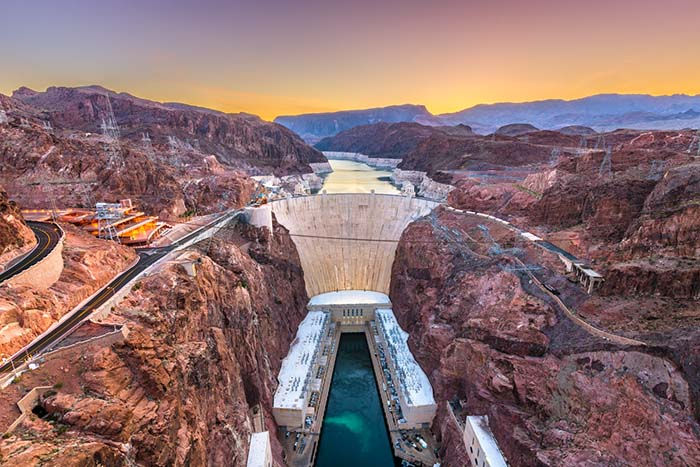
The main reason for building Hoover Dam was to supply the electrical power necessary to transport 4.4 million acre-feet over a quarter of the Colorado River's average annual flow—to California. Because of Hoover Dam, the Colorado River was controlled for the first time in history. Farmers received a dependable supply of water in Nevada, Arizona, and California. Numerous cities such as Los Angeles, San Diego, and Phoenix were given an inexpensive source of electricity, permitting population growth and industrial development. Hoover Dam also provided for flood control and irrigation.

Before the work started the job at hand was to divert the river from the construction river to not affect the work. Diversion tunnels for 3 miles on both sides of the river were built. Due to this the riverbed was dry and thus the real work began. Excavation began by removing the sediments and rocks to reach the bedrock. The design that was planned was arch-gravity dam which will transfer the force of the reservoir by the water to the cannon walls. For this the cannon walls needed to be strong hence workers had to rappel down the wall and remove anything loose on the wall. Falling rocks were a serious hazard, so the workers dipped their hats in tar and let them dry and harden — the first hard hats. They have used 6.6 million tons of concrete; the extreme heat in the southwest makes building structures like the Hoover dam extremely difficult. If all of the concrete was poured in one go then it would have taken 125 years for it cool and form the dam. One of the workers Frank Crowe found an ingenious method to solve this problem, he wanted to cool the concrete with ice water from giant blocks from a refrigeration plant. It did work perfectly and the dam was completed two years before schedule. The Lake Mead became the world’s largest man-made lake after the dam became functional. The volume of water can cover the entire state of Connecticut with water at a height of ten feet.


Comments